Soil Application Around Foundations
Termite Treatment in Appleton, WI
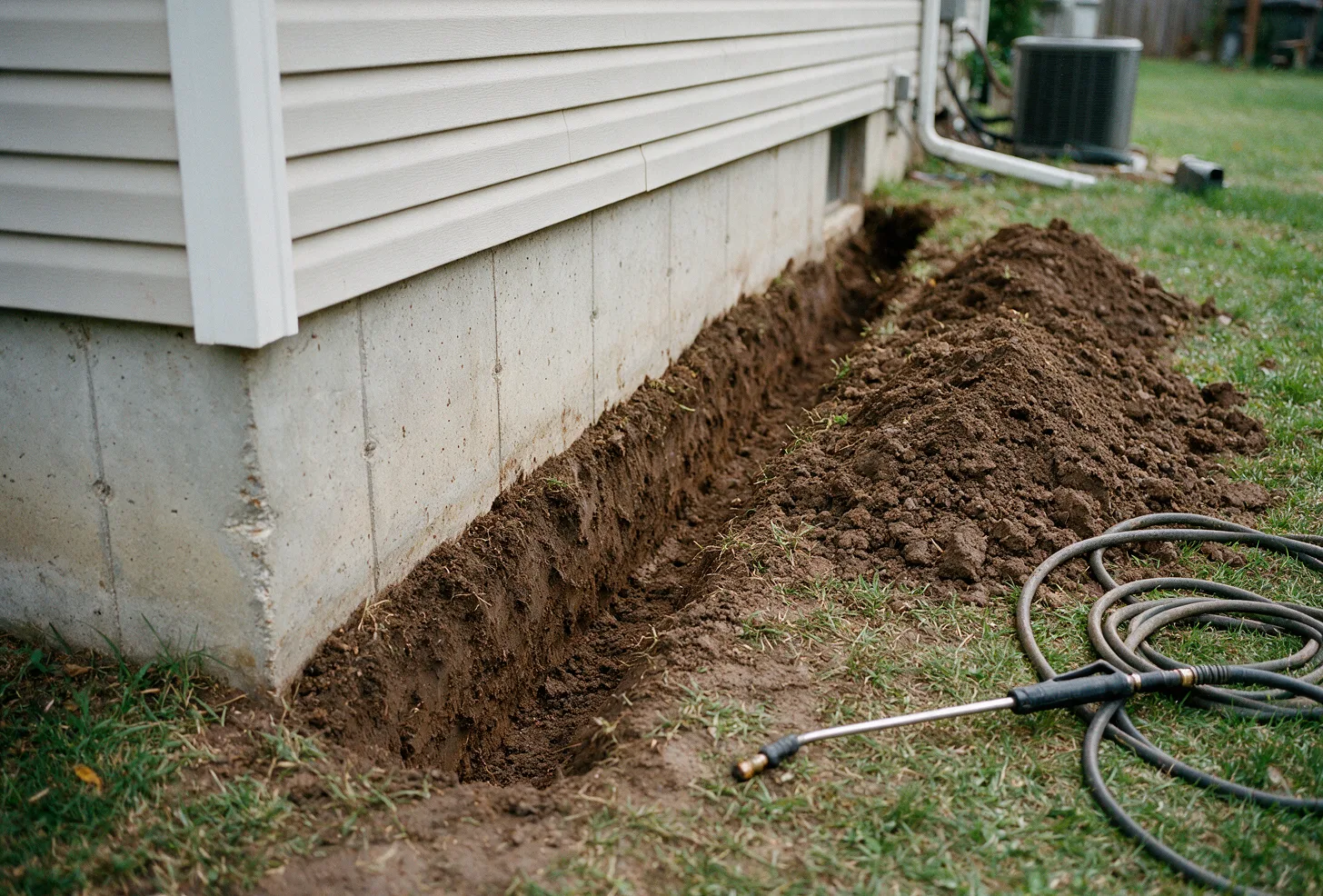
We trench along the outside foundation wall and rod the soil with non-repellent termiticide on homes with basements and slabs throughout Appleton and nearby Outagamie County towns.
Trenching and Rodding Process
Technicians dig a narrow trench beside the foundation and apply the product directly into the soil where termites travel between the colony and the structure. We follow the wall closely.
On slab homes we drill through garage floors and entry stoops at set intervals so the liquid reaches the soil beneath the concrete.
We also treat along utility entry points and expansion cracks where termites often find their way up from the ground.
Winter Ground Conditions
Frozen soil several feet deep limits where we can place the product until thaw occurs in spring.
Timing Factors
- Ground stays frozen into April most years
- Heated basements allow limited winter work near foundations
- Snowmelt and spring rains saturate clay soils
- Treatments start once frost leaves the upper soil layers
- Swarm season April through June follows these applications
Soil and Construction Details
- Heavy glacial clay holds moisture after rain
- Fieldstone and block basements have many entry gaps
- Poured concrete slabs require drilling at edges
- Mature trees and mulch beds sit near many foundations
- Sump pump discharge lines need careful treatment around them
Once Walleye Capital Termite Removal Experts gets the termiticide into the soil termites encounter it on their normal foraging routes. They carry it back through the colony where it spreads to other members over the following weeks.
Product Movement Through the Colony
| Stage | What Happens |
|---|---|
| Day of application | Termites cross treated soil while foraging |
| First week | Workers pick up product on bodies and mouthparts |
| Second week | Grooming and feeding transfers material to nestmates |
| Third to fourth week | Colony activity drops as numbers decline |
| Ongoing | Residual product remains in soil for continued contact |
Non-repellent termiticides do not cause immediate avoidance so termites continue to travel through the treated zone and move the active ingredient deeper into the colony.
This transfer method works because eastern subterranean termites in the Fox Valley stay active next to warm foundations even when deeper ground remains cold.
Follow-Up Checks
After the initial application we return to inspect for any remaining mud tubes or new swarmers and address spots that need extra attention.
Homeowners notice fewer signs of activity as the colony weakens though complete elimination takes several weeks depending on colony size and access routes.
Some homes need both liquid treatment and monitoring stations. We discuss whether Termite Bait Stations make sense for your property after the soil treatment is complete.
Questions about termite treatment around Appleton
- How many years does a soil treatment keep working?
- The product stays effective in the soil for several years provided the treated zone is not disturbed by new construction or major landscaping changes.
- Can treatment be done in winter?
- We can treat areas next to heated basements and slabs when the rest of the ground is frozen but full perimeter work waits until the soil thaws.
- Will the termites come back after treatment?
- The non-repellent product continues to work as long as it remains in the soil so returning foragers pick it up and keep reducing the colony over time.
Liquid soil treatment forms the core of most Termite Treatment plans we complete in Appleton. We also install Termite Bait Stations on properties where ongoing monitoring fits the situation.
Schedule Termite Treatment
Contact us to set up an inspection and discuss soil treatment around your foundation.
Call (920) 528-5821