
In-Ground Monitoring Approach
Termite Bait Stations in Appleton, WI
In-ground bait stations sit in the soil along the foundation perimeter. Workers encounter the stations during foraging, feed on the cellulose matrix inside, and transfer the material through the colony over successive trips.
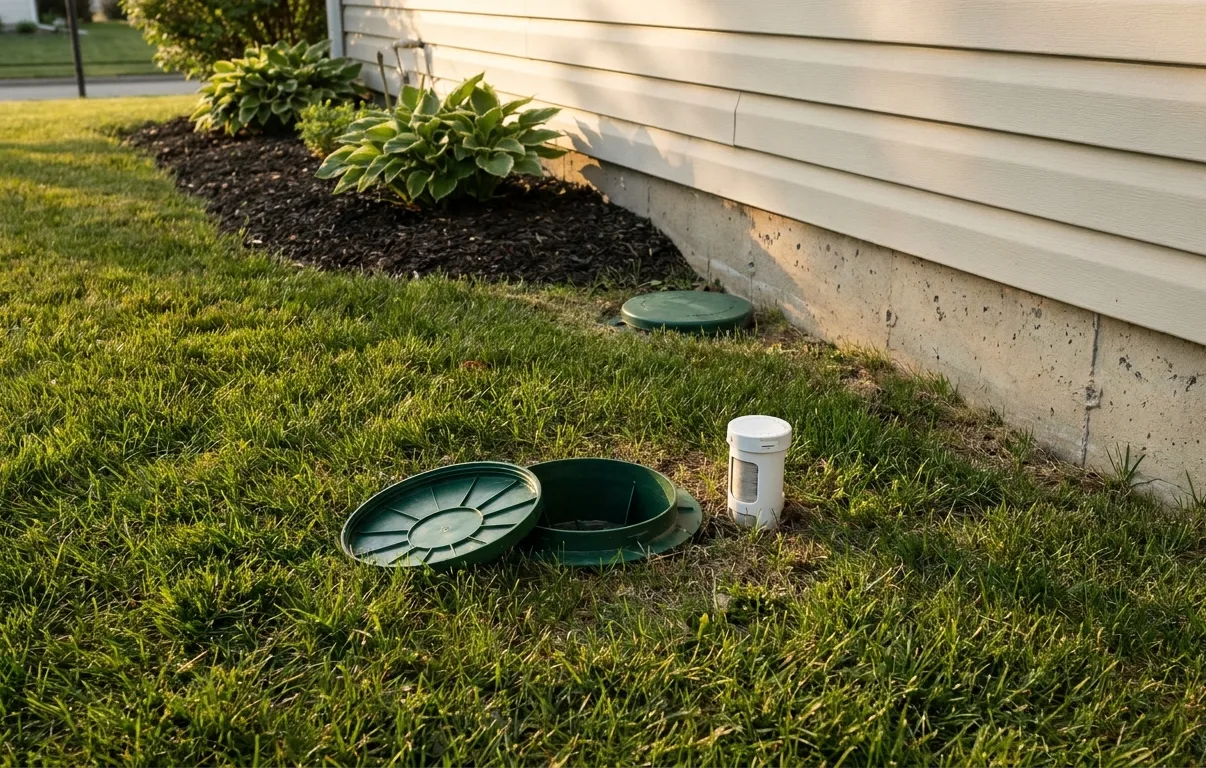
Station Placement Around Foundations
Technicians install stations at regular intervals in the soil next to the foundation wall. Spacing follows the grade and any nearby wood sources such as decks or stumps common on Appleton lots with clay soils.
Each station holds a monitoring cartridge that workers discover while moving through the upper soil layers. Once activity appears, the cartridge is replaced with an active bait matrix that the colony continues to feed on.
Placement avoids buried utilities and accounts for sump pump discharge lines or French drains that can alter moisture patterns near the basement walls in older frame houses.
How Workers Move Bait Through the Colony
Foraging termites locate the bait, consume portions, and return to share the material with nestmates through trophallaxis.
Worker Activity Steps
- Workers exit mud tubes and explore soil near the foundation.
- They enter the station and sample the cellulose bait.
- Material is carried back along existing trails to the nest.
- Nestmates receive portions and continue the exchange.
- Gradual reduction in numbers occurs over multiple weeks.
Monitoring Schedule Factors
- Stations receive quarterly checks during active months.
- Winter visits focus on stations near heated basements.
- Frozen ground limits shallow foraging in clay loam.
- Technicians record new mud tubes or station hits.
- Bait is refreshed only when workers are present.
Winter activity drops because soil temperatures fall several feet down, yet colonies remain viable next to warm foundations. Stations near these heat sources still receive checks so any renewed foraging is caught early in spring.
When Bait Stations Fit a Property
| Situation | Bait Preference |
|---|---|
| Heavy mulch beds and stumps near house | Lower soil disturbance |
| Slab-on-grade homes with limited access | Perimeter installation only |
| Recent real estate wood-destroying insect report | Documented monitoring record |
| Areas with shallow utilities or drains | Targeted station spacing |
| Homes already treated with liquid termiticide | Supplemental colony reduction |
On these lots bait stations fit well when liquid would reach gardens or play areas. You set them with minimal digging near the downspouts and the workers still pick it up - so the colony spreads the bait and numbers drop over weeks.
Some properties combine both methods: a non-repellent liquid termiticide applied to soil at the foundation while bait stations handle longer-term colony tracking. The two approaches address different parts of the foraging zone without overlap in the same soil band.
Scheduled Checks and Seasonal Patterns
Stations are inspected on a fixed rotation so any new activity is found before swarmers appear in late spring. Records track which units show feeding so bait can be added only where needed rather than across the entire perimeter.
In the Fox Valley the ground stays cold into April, which delays shallow foraging. Stations placed against south-facing walls or near furnace vents often show earlier hits because the soil warms first in those locations.
Checks continue year-round on an adjusted schedule. Winter visits confirm stations remain intact and note any changes in soil moisture from snowmelt that could influence spring activity near the foundation.
Questions about termite bait stations around Appleton
- What spacing do you use between stations?
- Spacing follows the foundation line at intervals that match local soil conditions and any visible wood sources. Closer placement occurs near decks, old stumps, or areas with repeated moisture from downspouts.
- Do the stations work in winter?
- Activity slows when soil freezes several feet down, yet colonies stay active next to heated basements. Stations in those locations are still checked so any renewed feeding is recorded before spring swarm season.
- Can bait stations be used with other treatments?
- Yes. A non-repellent liquid termiticide can be applied at the foundation while stations monitor and reduce the colony over time. The methods target different zones without interfering in the same soil layer.
Schedule a visit to discuss Termite Bait Stations or Termite Prevention options suited to your foundation and soil. Walleye Capital Termite Removal Experts places and monitors units through the seasons common in Outagamie County.
Request Termite Bait Stations Placement
Contact our technicians to evaluate in-ground station options around your foundation.
Call (920) 528-5821